

Showing posts with label Sulawesi (Indonesia). Show all posts

28 November 2006

Onto Greener Pastures


After our interesting funeral experience in Tana Toraja, we headed out for a hike in the surrounding area. We had been looking forward to trekking through the hills and getting splendid views of the 'lush, green countryside' that our guidebook raved about. We had expected serene little farming villages and terraced rice fields of splendid shades of emerald much like we had been privilged to see in the mountains of the northern Philippines. But when we arrived in Tana, we discovered that most of the rice had been harvested already and the fields were caked and dry and since the area had seen a unusually long 4 month dry spell the 'lush, green countryside' was scorched and brown. Oh well. We figured that our hike may not offer as many 'spectacular panoramas' as the maps and books claimed but it would be nice to get out in the villages by way of our own legs.

We had chosen to take the route from the western side of the Tana Toraja region to a neighboring area: Mamasa Valley. The trip was to cover about 60 kilometers and take a total of three days. After three days in Rantepao, the tourist capital of Tana, we were ready to get out of this scorching hot place and took a truck to the little town of Bittuang. When we arrived in Bittuang, we found that our the trail for our hike would once again be plied by cars and motorcycles. Our thoughts of traveling to remote villages only reached by foot would not be exactly what we expected but when is it ever. We headed of in the middle of the day and the sun burned down from above but luckily the higher elevation made the temperature at least bearable.

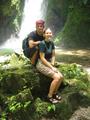
Our first day was the shortest and we covered about 12 kilometers before arriving at our destination: the small village of Paku. The road to get here reminded both of us of the Western U.S. with pine trees surrounding us and the air as dry as the desert. It was a pretty deserted trail with only a scattering of houses along the way and the occasional Land Cruiser that passed by accompanied by a choking cloud of dust. When we did arrive in Paku we were greeted by a nice little village snuggled in a greener valley and many rice fields that had just been planted. We could only imagine the beauty of this place had it been wetter and greener but it still was not a bad place to rest our tired feet. After checking into the homestay and being served a welcome pot of tea, we decided to explore the small kampung (village).

The next morning we arose and made our way towards the village of Timbaan. This trip was a bit longer and a bit hotter than the previous day and we were greeted by a not so welcome steep hill for the final leg. During the last few miles we also met a young teenager who asked us where we going. He was evidently from the same village we were going to and when we passed his house he insisted that we stay there. It was still a little ways from what looked to be the main part of Timbaan (not to say that the main part of this village was too large) but we decided that it sounded like a good idea. Anyways the irrigated terraced rice field in front of the house offered one of the nicest views that we had seen along the trek and it allowed for the snapping of a few decent pics. Here we traversed the steeply terraced fields to bathe in the river, while the chilren watched and swam, since there was no bathroom at our homestay.

Our final day of the hike would bring us to Mamasa Valley but not before passing over a ridge that did not look so steep or far when we started in the morning. But three hours later when we were still hiking up, we realized that our eyes had deceived us and that we would certainly be sleeping well that evening. Once we finally started to head down we realized that this valley was a bit wetter and as we headed closer towards Mamasa the fields did get greener and the forest surrounding the trail a bit thicker. The last few hours of the hike was even met by a decent rainstorm and the lush, green countryside finally came into view.

The cultural highlight of this trip was a brief stop at a 400 year old boat-shaped house. The owners of the house were gracious hosts and even though their were language barriers, we had a good time trying to discuss the house as well as America. The house was impressive, even in its run down state, with its intricately painted designs and its very large posts (there was no more lumber like that left in the valley).

Mamasa was certainly not as touristy as Rantepao and overall the smaller town suited us better. We had a chance to rest and relax a bit the next day as well as tour around the market. The people of Mamasa share many aspects with the folks in the neighboring Toraja region and have a similar language, architecture and cultural traditions. While this area has not embraced tourism to the extent that Toraja has and their cultural traditions may not be quite as evident, this place was certainly worth a visit and the trek to get here made it even more enjoyable.

16 November 2006

Land of Funerals


In Tana Toraja, nothing is higher on the social scale than attending traditional funerals. These may be the ultimate fiesta (I thought Filipinos were food crazy). In Toraja there are 3 types of funerals: one for the lower class (not much fun to attend, according to the guides because they're not as elaborate and only last for a day or two), one for the middle class, and one for the higher class (3-4 day presentation with hundreds of guests, music, chanting and food).

I'll discuss the high class funeral, because this is the funeral we attended, but first, let's discuss the odd habit of foreigners to barge into funerals uninvited to watch how the locals grieve. One of the biggest draws of Torajaland are the elaborate funerals. At these funerals, white people generally pay a guide an exorbitant amount of money to act as an interpreter for the day. The tourists usually ask to be forgiven for crashing the event with by presenting the family with packs of clove cigarettes or kilos of sugar. Then the tourists proceed to stomp around the grounds shoving cameras into the faces of the cute and dressed up while the locals try to proceed with their traditions. It's all very bizarre. And though I'm just as guilty as all the other tourists, I'm not sure that if given the chance I would do it again because I have conflicting issues on this type of "cultural" tourism. I know I don't like it when Indonesians shove camera phones in my face to snap a picture at the "strange and unusual tourist" and I expect most Indonesians feel the same about me ogling over their everyday way of life.

Having said that, there were many interesting things I learned by going to the funeral. Like I mentioned earlier, we attended the funeral of a high class woman who was in her 90s when she died. There were literally hundreds of guests, mostly distant relatives and close friends who came from all over the island (and the country) to attend the four day event. The relatives generally bring gifts of live pigs, which are slaughtered as food for the guests. If the family can afford, they buy as many carabao as possible and slaughter most of them on the 4th day, though we were lucky enough to watch a killing because they needed food for dinner. In the case of the funeral we attended, the family had SEVEN (7) carabao to be slaughtered!!!

The food is generally pig or carabao cooked for 2 hours inside a bamboo tube. The meat is so tender! In between meals, there is LOTS of tea and coffee which are served with cakes.

The Torajan people are very class oriented and everyone knows their position in society. At the funerals, those from the high class get the best seats and the best service, the middle class get to sit in a large bamboo "stadium" and the lower class are the ones preparing the food and serving the meals. I think the classes are a bit like castes since I was told that a lower class person may become rich, but they may never become high class.

It's amazing how much of the funeral culture was retained, even after the rigorous proselytizing by the Dutch. Most Torajans are Protestant, though about 15% are still animist. Yet of the 4 day funeral, only the evening of the 1st day is the pastor present. The rest consists of chanting, dancing and other traditions.

The other draw in Toraja are the boat shaped houses. The houses are shaped this way because Torajans believe that when their ancestors came from China the valley of Toraja was still filled with water and the ancestors docked their boats on the mountains and settled. Traditionally these houses were built out of wood and bamboo with grass roofs, though many people now only use the oddly shaped architecture for their rice silos and they are almost all roofed with corrigated iron. The carvings and paintings on these houses are absolutely amazing! Such a contrast from the half finished houses of the 'Pines. Each wooden panel is carved with designs of carabao, swirls or other designs which are then decorated with 4 colors: black, white, yellow and red which symbolize participation, bones and purity, gold and blood respectively.

We had planned on doing some hiking in the area to get away from the tourists, but its the end of a long dry season and the surrounding land looks parched and brown. Also Laura sprained her ankle on our last expedition and thought it better to rest. We will begin our 3 day journey to the neighboring valley with in the next few days. This area is hopefully less touristy and I hear that there are some interesting architecture there as well.

09 November 2006

Giant Stones


Scattered throughout two valleys in and around Lore Lindu National Park are megaliths that are over 2000 years old. They were left by a culture which disappeared from the area long ago. People today know very little about the culture that left the megaliths and the reason for them. There are 3 types of megaliths: discs, urns and figures. The discs and urns are the most frequent and anthropologists suspect that they once housed the remains of the dead. The dead were placed inside the earn in the fetal position. One urn with its disc shaped lid per family...a communal stone coffin. I never could figure out the hypotheses for the large figurines, perhaps they were the gods. What makes these megaliths even more mysterious is the fact that the stones with which they are made cannot be found in the valley where they stones lay. How did they ancient ones get the stones to their current location? I think it was with the help of aliens! :)

After walking for 3 days through some amazing and not so amazing primary forest, we came to Bada Valley, which is home to a large collection of megaliths. I say some not so amazing forest because along the way we ran into multiple tracks of newly cleared and burned land. It was quite depressing to walk through large expanses of destroyed (often national park) forest knowing that a week, month or year before it used to be alive and well. In the Philippines we did not see that much primary forest and though it was sad, it had long been destroyed and therefore we were apt to see the possibilities for rehabilitation. Yet, in the newly denude areas, its hard to imagine it ever getting any better and its heart wrenching knowing that what has happened to the forests of the 'Pines 30 years ago is only now happening to the area surround Lore Lindu. As we walked we lamented and tried to foretell the future of the area as well as discuss ways we may contribute to a healthier environment in work and our daily lives.

Once in Bada Valley our sadness was temporarily pushed to the back of our minds. The scenery was vastly different from the mountains of the park. The valley has been inhabited by agricultural peoples for centuries and it shows in the vast grasslands and rice fields, but these only added to it character.

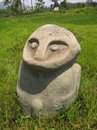
We hired a guide for a day hike that was to lead us through the part of the valley which is most heavily laden with megaliths. This hike lead us first through the rice paddies where a few stones lay askew in the thick of the grass. Our favorite here was the "monkey" figure who was short and squat and not entirely monkey-ish. Then we went through an area filled with large urns. The climax of the trip was through the brown valley to the site of a large male rock. This rock is out in the middle of nowhere with no other megaliths near it (very strange). It stood about 12ft about the ground and was impressive with its perfectly circular eyes and symmetrical nose.

Welcome to the Jungle - Sort of...

After being in a jungle of tourists in North Sulawesi we decided to head to a real jungle: Lore Lindu National Park. We did not know a whole lot about the place other than there were some rainforest and some opportunities for trekking. We didn't hear about any other tourists who were heading that way so we packed our bags and got moving.

We ended up on a bus that took more than twenty four hours but was suprisingly comfortable. It was quite a windy road since it passes through many mountain ranges but was paved the entire way which we were not expecting. We passed from the much more affluent and Christian Minahasa region where beautiful wooden houses and churches were prevalent into a noticeably poorer area. After driving through the night we were awakened to an area that had been extremely deforested. The mangroves on the coast were only stumps and many of the hills were littered with recently burned trees. It was quite disheartening and a drastic change from what we had seen in the north.

We finally arrived at our destination of Palu which is the largest city in Central Sulawesi and got a good night's rest after the long journey. The next day came the visit to the Lore Lindu Park Office. We discovered that Lore Lindu has one of the largest tracts of forest left in Indonesia and this in addition to a large range in elevation means a great deal of biodiversity. We also found that there is an expansive list of wildlife found within the park boundaries including anao (mini buffalo), babirusa (deer pig) and monkeys to name a few. We knew that we probably would not see many but it was exciting to hear that there was such a great area of forest and we were going to be hiking in it.

We headed on our way the next day and were ready to get some hiking in after spending days on a bus and in a city. Our first plan was to spend some time at the large lake in the center of the park called Danau Lindu (danau = lake in Bahasa Indonesia) where there was an enclave of people within the park. We took a car to the turnoff for the "trail," which was actually the only road to the lake from that particular side of the park. The road is narrow and harrowing and thus can only be traversed by motorcycles. At the beginning of the road, we were greeted by ten people wanting to take us to the lake by motorcycle or at least to carry our bags for us. (In a strange show, one of the porters tried lifting my bag while moaning and groaning about how heavy it was...if he could barely lift it, how was he supposed to carry it for me?)


We opted for walking rather than the motorcycle (we were here to hike weren't we?) and I am sure glad we did. This would have been a pretty scary motorcycle ride and it actually turned out to be a scary hike at times with literally hundreds of motorcycles plying the narrow steep path during our 6 hour hike. They plied the road piled with fish and rice from the lake or cement and other necessary products for the villages by the lake. The trail was the only way in and out of the area and the people used it whole-heartedly.All of the traffic was not exactly what we envisioned when we planned to go hiking in the dark depths of the forest, but it was still a great hike. We saw many massive trees along the way (much bigger than we have seen in the Philippines - they would have surely been cut down there, especially if they were so close to the road). We were also greeted by the racous calling of red knobbed hornbills, which are indigenous to the island. We had already seen these flashy, gorgeous birds in Tangkoko and were not expecting many more but saw about 15 along the way. As for the motorcycles:

After an arduous hike with our heavy packs we arrived in the village of Tamado, which is situated on the lake. We found the local homestay, where we crashed after a delicious dinner. The next day, the owner of the homestay who is also one of two park rangers in the area took us on a monkey hunt. We hiked through dense plantations of cocoa and coffee until we reached the edge of the enclave. Along the way we didn't see any monkeys but there were a few birds and a few very large trees which had been cut down to be used as dug-out canoes but they were mysteriously abandoned before the job was completed. After about 5 hours of wandering through the plantations and the forest we arrived at a little stream where the guide said was a favorite haunting ground of the monkeys. We waited, but alas, it was in vain. As we headed back through the cocoa thicket our guide noticed cocoa pods which had recently been eaten. Apparently, after we left the area the monkeys came to steal a little treat but they didn't stay long enough for us to catch a glimpse because they were frightened by the loud sounds of a chainsaw in the distance.

The next day our guide took us to another spot near the enclave's boundary in order to spot monkeys and we found a small group who swung from trees in the distance. We tried to chase them to get a better view but alas the monkeys escaped again. These creatures were certainly not as tame as the ones in Tangkoko and it is interesting how much their behavior changes due to human influence. The monkeys in this area are certainly not as well liked by the farmers in the area because of the damage they cause to the cocoa and other crops. The monkeys are in turn hunted and run when there is any sign of a human. Once we finished our short hike in the forest, our guide took us to the edge of the lake to get a better look at a monkey. Unfortunately this one was tied up next to a house and served as a pet to one of the locals.

The next day we left this serene little community on the lake which was different than we had expected but left us with a good impression.

Tourist's Haven (?)

Minahasa Highlands...I don’t know even where to begin discussing this place. What I can tell you is what I’ve learned about Indonesia…never trust tourists’ recommendations.


We were planning on skipping the highlands in lieu of a less touristy, more remote national park. However, almost every European tourist we ran into commented on how gorgeous and cool the Minahasa Highlands were. They also all mentioned the bizarre market where everything from dog to rats to giant fruit bats are sold.

So resigning into pressure, we decided to see what all the hullabaloo was about. Our plan was to stop in for a day or two, check things out then proceed back into the depths of the jungle (or so we hoped).

Unfortunately, we somehow were time warped into spending 4 nights in the Highlands and seeing very little. Not to mention that we never did find the scenic tourist cottages and instead stayed in a sketchy (but cheap!) drive in hotel on the outskirts of town. I don't know where our affinity of these sort of places comes from, but I hope it ends soon. Yet, this must have been one of the more popular hotels with the locals, because it was the only hotel anyone could think of when we asked around for a place to stay.

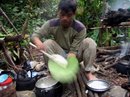
The market wasn't even mentionable, though we will leave you with a few pictures (not for the faint of heart nor the doggie lovers).

The only other activity of note was a hairy hike down to a nice waterfall where we got caught in the POURING rain for 1/2 hour with no rain gear and all of our important documents getting wet.

One more thing: If you're ever planning on staying in Minahasa Highlands, may we suggest staying away from the touristy Tomohon and spending the night in the sleepy town of Tondano (which Lonely Planet recommends NOT doing...)

29 October 2006

You Want Me to Dive Where?!?

Lembeh Strait diving could be considered the antithesis of Bunaken coral reef diving. One does not got to Lembeh to view hordes of brightly colored tropical fish or large sea reptiles. Instead, at Lembeh, one searches the black sandy sea bottom for small but unusual critters, many no larger than your thumb. This is called "muck diving" because of the muck that is kicked up as one swims over the soft substrate. Muck diving in this area is a relatively new phenomenon (its not even in the Lonely Planet yet...but probably in the next edition). The resort we dove with is brand spanking new and it is one of the 5 resorts that have opened in the past year....many of them branches of the ones found in Bunaken. Searching the sandy ocean floor may not sound like fun, but it's actually a lot of fun playing investigator...and you never know what you may find!

To start off, we made our way from Tangkoko to Bitung. We had an interesting time trying to find accommodation in Bitung and ended up "chartering" a public mini-van. By charter we mean asking him for information on where to stay and then him proceeding to drop his other passengers off and chaffuer us around without our permission and then charging us half of what we spent on the room. My biggest beef so far with this country is that everyone seems to think its ok to charge the foreigner double, quadruple, octuple the local price for transportation. We're beginning to realize that if you ask "how much?" it really means "I have no idea what I'm suppose to pay so please feel free to take advantage of my innocence and empty my pocketbook." We've just started shoving how much we think the price should be in the driver's face then running away before he could charge us more.

Anyway...

We'd heard rumors that prices on Pulau Lembeh were a bit steeper than prices on Pulau Bunaken and since we're trying not to splurge all of our money before we reach the end of our trip we decided to head to the city of Bitung (pronounced Bit-oong) on mainland Sulawesi and see what information we could dig up about the island and diving. We hadn't anticipated that diving the area is so new that none of the locals are familiar with it! We came to the city with no information about how to get to Pulau Lembeh or contact information of any resorts. So bright and early we made our way to the wharf and began asking around. Thankfully we were able to fumble around enough Bahasa Indonesia to get our point across and actually ran into a dive guide who was on his way to work. We stopped got off at the dive shop he worked at and immediately set to work getting ready for two dives since our plan was to dive and then head back to Bitung for the night.

Muck diving is difficult to explain...its not what you'd call exhilarating and there aren't schools of fish to ogle over...but it definitely has its moments. Muck diving is more akin to playing detective and your reward is to witness the most unusual animals of the shallow seas. We saw (among other things) ribbon eels with firey nostrils, frogfish the size of a plate and pygmy seashorses no more than 1/2 an inch long. Overall, we'd both rate diving in Lembeh better over diving in Bunaken and we're hoping that we'll get to return to Lembeh Straight before it turns into a major Indonesian port.

Wildlife Extravaganza

Tangkoko-Batuangas Dua Saudara Nature Reserve. Home of black macaques, tarsiers, hornbills and other amazing creatures. We envisioned spending days in the woods alongside the animals, returning to nature and observing wildlife, something we got to do very little in the Philippines otherwise known as (by me) The Land of Empty Forests.

Well, our vision of Tangkoko was not quite as expected but it was still spectacular. We arrived to the village of Batu Putih on the outskirts of the reserve by riding on the back of a pick up truck that had been rigged up with wooden benches which fit about a dozen people and their various goods. Again, we picked the accommodation based on the price, but our decision ended up being a good one since the owner was also a park ranger.

The entrance fee to the park was steeper than expected. For every three hour venture into the wilderness one must pay the equivalent of $8.88 PER PERSON. This fee includes the guide, but if you want to take a day long hike the price jumps to $10.10 and if you're there to watch birds the price is over $20!!!

We paid the astronomical fee and received our guide, who was very knowledgeable about the area. Our first hike was in the evening and therefore we were there mostly to see the Tarsier. The tarsier is the smallest primate (think gorilla) on earth. It is a nocturnal creature with one of the largest eye to body ratio of all animals. There are many species of tarsiers and even one inhabits the island of Bohol in the 'Pines where we had seen them in horrible little tourist venues. Now was our chance to see them in the wild, going about their wild lives. We waited by the tree house of one tarsier family until dusk. As we watched the lazy critters slowly began to emerge from the depths of the fig tree. Just before it was too dark to see anything, they began to jump, on the hunt for small insects and lizards. They were like lightening as they zipped from sapling to sapling. It was the highlight of the trip.

The rest of the hike wasn't too shabby either. We saw a gang of about 20 macaques, a pair of gorgeous red beaked hornbills, a monitor lizard and sleeping tarantulas. We were extremely lucky to see all of this in one three-hour hike and we came back to the homestay thrilled!

We went on one other hike with our ranger friend, who got us a scam on the entrance fee ($5 for both of us instead of $16). We went with a Malaysian couple who are wildlife photographers. For this expedition they wanted to shoot the tarsiers and so our guide brought a little snack to lure the primate out of its hole. We went to see the same tarsier family only this time there were hoards of onlookers snapping flashing cameras in the face of the poor wide-eyed tarsiers. Then the guides got out a gecko and tied it to a string to taunt the primates. It was pitiful. I felt so sorry for both the gecko who was slowly mangled and for the tarsier who was duped into thinking it would get an easy meal. On the flip side, I did get a few nice videos of them jumping (but I did NOT use flash and I tried to stay a fair distance away from them). Just to show how lucky we were the first day, on the second hike we only saw the tarsiers and a few birds. We did see a cus-cus (think sloth) very high in the canopy but it looked more like a clump of dead leaves than anything (still pretty exciting to a couple of biologists!).

We also spent some time sneaking into the forest. We followed some trails at the edge of a pasture and were able to leisurely search for birds and watch a group of macaques play at the creek with no other tourists watching. If we didn't need to be so stealthy, we would have spent more time exploring this unique area.

Diving across new borders

Saying Goodbye to the 'PinesWell after another failed attempt to climb a mountain we decided we have had enough of the Philippines. We are outta here. Actually our visas were up and Mt. Apo was our last plan for the country that we have called home for the past two and a half years. For me it did not really sink in until the last night that we would be leaving this wonderful country that has provided us with so many memories. In many ways both of us wanted to stay longer to visit more places and meet more people in a place where we felt familiar with the culture, language and surroundings. But another part of us was itching to move onward to new destinations on a trip that we had been planning for the past year or more.

So the day after we got back from Apo we headed to the airport with our Indonesian visas in hand. Luckily our taxi driver was one of the nicest that I have had and it made me remember what I will miss most about the Philippines: the people. Sure I have had to leap over cultural barriers and sometimes living in this country has not been the easiest but the people here have made it so worthwhile and have given me life long memories.

Back to the airport. We were headed to Manado in northern Sulawesi (a huge and weirdly shaped island in eastern Indonesia). This area is known for its unparalleled marine biodiversity and amazing diving and this was one of the main reasons that we were headed here. After our hour long flight we were already in a new country excited about the potential that it held. We were also both a bit anxious about a new place where they did not speak the language that we had grown so accustomed to speaking and knew that it would be harder to get around and have deep connections with people that we had in the Philippines. But we were ready and got through customs with no problem. Then we haggled a bit for a taxi that brought us to our first hotel in Indonesia. We tried to communicate with the folks at the reception with our few Indonesian words that we had been studying and our message was successfully conveyed with accompanying hand signals. So we navigated our way through our first hurdle without too much trouble and we were feeling confident. It would certainly be more difficult to get around here but hey that is part of traveling.

Hello Indonesia
We went out on the town of Manado for a bite to eat and the streets were filled with food stalls (these are somewhat lacking in the Philippines) serving delicious looking food. We sat down for an absolutely delicious and spicy meal of gado gado and a coconut curry. It was sublime (absolutely delicious food for less than a dollar). I was certainly going to enjoy this part of Indonesia.

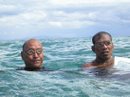
The next morning we headed to the port to try to find out about the boat to Pulau Bunaken (Pulau is Bahasa Indonesia for island) off the northern shores of Manado. This part of the world considered the "coral triangle" and is the center of underwater biodiversity. The Philippines is also part of the triangle, but its waters are largely overfished and only 5% of its corals are still in pristine condition. The corals of Sulawesi, however, are rumored to be spectacular. According to the Lonely Planet, Pulau Bunaken is where divers go when they die. And so we came to the island to see for ourselves. There isn't a huge selection of accommodation on the island. It's a fairly small island with a small community with basic living conditions. Most of the accommodations are owned and run by foreigners (surprise, surprise!). We decided which accommodation based on the overwhelming response from the locals as to where was the cheapest place on the island. It was also a good choice since it it's also the only locally owned resort on Bunaken. The first day on the water we went out with other guests on a snorkeling extravaganza. It was brilliant! The colors were spectacular and the fish were plentiful. I hadn't seen such a wide variety of fish since the Great Barrier Reef. It was overwhelming. So many species and many we had never seen before. We visited three spots and were in the water most of the day coming away tired a little sunburned but fulfilled.

The second day we dove. The first dive was also incredible. We saw 3 of the largest green and hawksbill turtles that either of us have ever seen (probably over 4 feet in length). One was even sleeping in a crevice on the wall of the reef and we were able to get a really close look. There was a huge Napolean wrasse that was almost if not bigger than we were (also something we never saw in the Philippines even though it should have been). The second dive turned out to be not as good but still a fair amount of fish including about 6 large large Napolean wrasse at the end of the dive and a whitetip reef shark. The area where some other sharks was devoid of them on this dive. Oh well. The next day we went for our final dive and we saw some other colorful corals and some more fish but again it was not as good as our first.

The afternoon we went for our last snorkel on the other side of the island in search of some rumored dugongs. We were not lucky enough too find them but the snorkeling was again superb with absolutely gorgeous coral with almost 100 percent cover in many areas (something we did not see too much in the Philippines or anywhere else for that matter). We also went for a snorkel in the mangroves which was a bit eerie but interesting with roots and branches surrounding us in the murky water.


Overall the island had offered some great snorkeling with amazing fish and coral diversity. There were sheer walls surrounding the island which provided some pretty good diving but not quite as amazing as we had anticipated. Perhaps we have been a bit spoiled by our diving experiences in the past and we are expecting too much. It certainly was not too much of a let down though. We had a few days in the water to be awed a bit by its natural wonders. Our first stop in Indonesia gets a check in our book (maybe not a check plus though).

We also had an opportunity to meet some other interesting folks who also made Bunaken their home for a short time. There were even two other Americans: one who was teaching English with the Fulbright program in Java and another anthropology student who was trying to find out a bit about the ocean and the people in the area. There were also the German and Swiss students who had been assigned to work on the island with an environmental education program for three months which feel apart shortly after they arrived. They gave an interesting insight on the island and development work in the area. It was weird to be in the company of other Westerners. It had been awhile again and it seemed like the island was crawling with them. It was nice for a bit of conversation but certainly does not help our Indonesian language skills. It is a bit weird to be on the tourist trail since it seems that almost all of the Philippines is off it. It has its good points and bad but we will try to jump off it soon at least for a bit.